



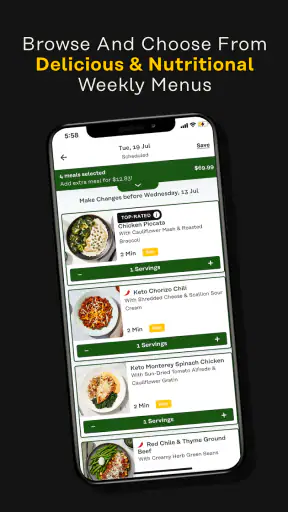
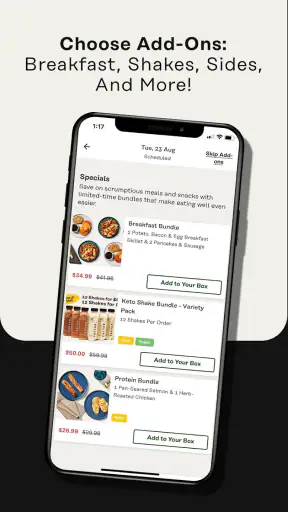
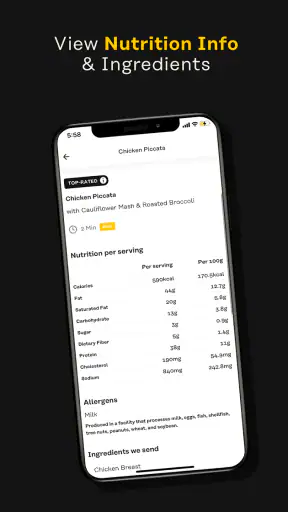
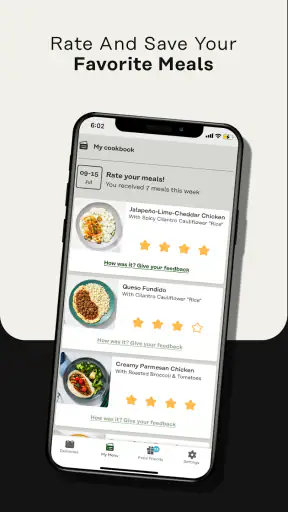
I tried Factor_ Prepared Meal Delivery with a simple household question in mind: could it make weeknight eating easier when several people share the same kitchen, but do not always eat at the same time? The app belongs to the Food & Drink category and is built around prepared meals rather than a traditional recipe collection. That distinction matters. I was not using it to learn cooking techniques or build a shopping list from scratch. I was using it as a way to reduce the number of decisions between a busy afternoon and dinner.
My overall impression is that Factor_ is most useful when the problem is meal planning without meal preparation. The service can take some pressure out of choosing what to eat, especially for someone who would otherwise order takeout or skip a proper meal. At the same time, it is not a magic solution for every household. Shared use raises practical questions about who manages the account, how people coordinate choices, and whether everyone is comfortable relying on prepared food.
How Factor_ fits into a shared household routine
The app is developed by Factor_, and it is free to install. Its current version is 26.35, with a minimum operating-system requirement of 10. The app has passed the point where it feels like a niche experiment: it has more than a million installs, an average rating of 4.3, and roughly fifty-four thousand ratings. Those figures suggest a well-established audience, although popularity alone does not guarantee that its approach will suit your kitchen.
In my household test scenario, one person might finish work late, another might have an evening appointment, and a third might simply want food without waiting for a full cooking session. A conventional recipe app would help only if somebody still had the time and energy to buy ingredients, follow instructions, cook, and clean up. A grocery-list app would solve the planning stage but not the evening workload. Factor_ addresses a different part of the problem by making the decision about a prepared meal rather than a cooking project.
That makes it especially appealing for people who want a more predictable alternative to last-minute delivery. I found the greatest benefit on days when the obstacle was not a lack of cooking ability but a lack of coordination. If meals need to happen at different times, a prepared option can be easier to fit around the household than one large dish that must be served immediately.
There is also a useful psychological advantage. When the next meal is already part of the plan, I am less likely to spend twenty minutes comparing restaurants or wandering around the kitchen hoping an idea appears. The app does not remove every food decision, but it can move the decision to a calmer moment instead of leaving it until everyone is hungry.
What the app is, and what it is not
Factor_ should not be approached as a general-purpose recipe organizer. If you want step-by-step instructions for turning raw ingredients into dinner, a cooking app is a better match. If your household enjoys choosing a recipe together, shopping as a group, and cooking from basic ingredients, this app may feel less engaging than your normal routine.
I see it as a planning and ordering companion for prepared meals. That makes it valuable for busy professionals, people living alone, households with uneven schedules, and anyone trying to make weekday food less chaotic. It is less compelling for a person who sees cooking itself as the main pleasure, or for a household that needs complete control over every ingredient and portion.
The free download also needs to be understood correctly. Installing the app does not turn prepared meals into a free food source. The app is free as software, while the real value depends on whether the available meal service and its cost fit your budget. I would treat the download as a way to explore the offering, not as evidence that the entire meal plan is free.
Setting up boundaries when several people use it
Shared-device use is where I would be deliberate. If one phone or tablet is used by multiple people, the household should agree on who is responsible for the account and final decisions. The app may be easy to open and browse, but casual browsing can become confusing when one person assumes a choice was confirmed and another person assumes it was only being considered.
My practical approach would be to use one clearly identified account manager and one agreed review time. Everyone can state preferences before that moment, but one person should make the final selection and check the details. This is not about inventing a family-control system; it is simply a sensible boundary for any shared purchasing workflow.
A shared device can also blur personal information. I would avoid leaving the app open where another household member could accidentally alter an account decision or inspect information that was meant to stay private. The safest routine is basic: sign out or close the app when appropriate, keep the device protected, and do not treat a communal screen as a private space.
For couples or roommates, this boundary prevents a surprisingly common problem: two people making separate assumptions about the same meal plan. One person may think the household is choosing convenience, while another may be expecting variety or a particular dietary direction. Writing preferences down before opening the app can make the browsing stage much quicker.
Coordinating choices without turning dinner into a meeting
The strongest shared-use workflow I found is to separate preference gathering from final selection. Instead of asking everyone to browse at the same time, each person can name a few priorities: lighter meals, familiar flavors, larger portions, or something quick for a late evening. The account manager can then use those priorities while reviewing the available choices.
This approach is better than trying to make every meal a unanimous decision. Unanimity sounds fair, but it can make a prepared-meal plan slow and repetitive. A rotating system works more smoothly: one household member chooses for part of the week, another gets input next time, and everyone understands that not every meal will be their first choice.
There is a trade-off here. Prepared meals can simplify coordination, but they can also reduce the shared activity of cooking together. If your household values the conversation and teamwork that happen during meal preparation, Factor_ should supplement that routine rather than replace it entirely. I would use it for the busiest evenings and keep cooking nights for the occasions when people actually have time to enjoy them.
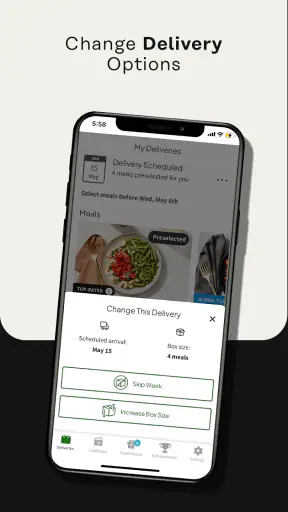
Another useful habit is to match meals to schedules rather than choosing only by taste. A meal for someone eating alone after a late shift has a different role from a meal intended for everyone at the same time. Thinking in terms of “who needs food when” makes the plan more realistic than treating the household as if it follows one fixed timetable.
Age, trust, and responsible access
The content rating is Everyone, which makes the app broadly suitable from an age-classification perspective. That does not mean every household should give every child unrestricted control over an account. The important distinction is between being able to view an app and being responsible for meal selections or purchases.
For a family, I would let younger users participate in preference discussions without giving them final authority over the account. They can help identify foods they like or dislike, while an adult checks the practical details. This keeps the experience collaborative without confusing browsing with authorization.
For teenagers or older children using a shared device, trust becomes more important than the age label alone. A household should agree on whether they may browse independently, whether they can change selections, and who handles the final review. Those are household decisions, not features I would assume the app provides.
Roommates have a different concern: personal boundaries. A shared account can be convenient, but not everyone wants their food preferences or account activity visible to everyone else. If privacy matters, separate personal use may be more appropriate than forcing every person into one shared workflow. The app can support a household conversation, but it cannot replace clear agreement between the people using it.
Where Factor_ beats ordinary alternatives
Compared with cooking from recipes, Factor_ wins on time and decision fatigue. The usual recipe route requires several separate actions: choose a dish, check ingredients, shop, prepare, cook, and clean. A prepared-meal app compresses that chain into a more manageable planning task. That is a major advantage for a household that repeatedly loses the evening to logistics.
Compared with restaurant delivery, the appeal is consistency. A restaurant app is excellent when you want something immediate or highly specific, but it can encourage impulsive choices and repeated spending. Factor_ feels more suitable when meals are planned ahead and the goal is to make the week less dependent on emergency ordering.
Compared with a grocery delivery service, the difference is even clearer. Grocery delivery still leaves somebody responsible for turning ingredients into food. Factor_ is aimed at the person who wants to remove that preparation step. The compromise is reduced control: you are choosing among prepared options instead of designing every detail yourself.
Compared with a meal-kit service, it is the opposite end of the convenience scale. Meal kits preserve the act of cooking while reducing shopping and measuring. Factor_ is better when even those remaining tasks feel like too much. If you want to practice cooking or involve children in preparing dinner, a meal kit may be the more satisfying choice.
Small habits that make the app more useful
My first tip is to decide the purpose of each planned meal before browsing. Is it for a rushed workday, a late arrival, a solo lunch, or a household dinner? This prevents the common mistake of choosing attractive meals that do not fit the actual schedule.
My second tip is to create a simple household rule for changes. For example, everyone can suggest an alternative, but the account manager checks the final plan. Without a rule like that, shared-device use can turn into accidental duplication, missed expectations, or arguments about who changed what.
My third tip is to use the app as a pressure-release valve, not necessarily as the household’s only food system. Keeping a few easy grocery staples or reserving one evening for cooking can preserve flexibility. The app is strongest when it handles the nights that usually fail, rather than when it is forced to satisfy every food preference every day.
A fourth insight is that convenience has a social cost as well as a financial one. If one person always manages the app, that person can quietly become responsible for everyone’s meals. Rotating the planning role or at least sharing preference input makes the arrangement feel more balanced. The technology can simplify food logistics, but it should not create an invisible household chore.
Friction points worth considering
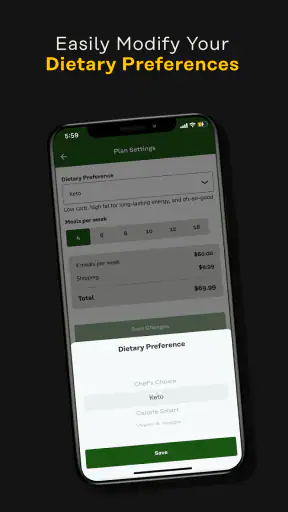
The biggest limitation is that convenience does not equal personal control. A household with allergies, strict dietary requirements, strong dislikes, or very particular nutritional goals may need to inspect every option carefully. I would not choose a prepared-meal service casually if one person’s health depends on avoiding certain ingredients; the decision deserves closer checking than a quick browse.
Another limitation is taste fatigue. Even a well-organized selection can feel repetitive if the same person keeps choosing familiar options. A rotating chooser and an occasional deliberate experiment can help, but users who need unlimited customization may prefer cooking at home.
There is also the question of value. The app can be cheaper than repeated restaurant orders in some routines, but “cheaper than takeout” is not the same as “cheaper than cooking.” If your household already cooks efficiently from inexpensive ingredients, prepared meals may be paying for convenience rather than reducing the food budget.
I would also skip it if the main goal is to build cooking confidence. The app removes much of the preparation work, which is exactly why it is useful, but that same strength means it offers less practice with planning recipes, handling ingredients, and developing kitchen skills.
Who should use it, and who should pass
I would recommend Factor_ to a person who regularly reaches dinner exhausted, a couple with mismatched schedules, or a shared household that wants fewer last-minute food decisions. It is particularly sensible when the alternative is frequent restaurant ordering or abandoning a planned meal because nobody has time to cook.
I would be more cautious for large households with very different tastes. Coordinating several people through one meal plan can become harder than expected, especially when everyone wants a separate style of food. In that situation, the app may still help on selected evenings, but it should not be treated as a complete answer to every person’s preferences.
People who enjoy cooking, need maximum ingredient control, or are working toward a very specific eating plan may prefer recipes, grocery delivery, or a meal-kit service. Factor_ is not inferior in those cases; it is simply solving a different problem.
My household verdict
After using it as a prepared-meal planning tool, I think Factor_ earns its place for households that value saved effort more than hands-on cooking. The app is free to download, rated for Everyone, and available on devices running version 10 or later of its supported operating system. Its 4.3 average from about fifty-four thousand ratings gives it a solid public reception, while the large install base shows that the idea has practical appeal beyond a small group of early users.
What I like most is the way it targets the awkward middle ground between cooking and ordering out. It can make a late meal feel planned instead of improvised, and it gives shared households a starting point for coordinating food without requiring everyone to be in the kitchen together.
What I would not do is hand over all household decision-making to the app without a clear routine. Agree on who manages the account, decide how preferences are collected, and keep age and privacy boundaries sensible. Those small choices determine whether the app feels helpful or becomes another source of confusion.
My recommendation is straightforward: try Factor_ if your real problem is time, energy, or uneven schedules. Skip it if you want cooking lessons, maximum customization, or the lowest possible cost from basic groceries. Used selectively and with clear household boundaries, it is a practical Food & Drink app that can make busy evenings noticeably easier.


